

Every time a user asks ChatGPT “what is the best tool for…”, “which company do you recommend…” or “which brands stand out in…”, it generates a response that can influence their decision.
If your brand does not appear there, you are not just losing a position. You are losing presence in a new recommendation space.
Un ChatGPT visibility tracker como AIBrandpulse360 is designed precisely to detect that gap. It shows whether a brand appears in AI-generated responses, how it is described, which competitors it is compared with and which sources may be shaping that representation.
In an environment where search is beginning to merge with conversation, measuring visibility in ChatGPT is no longer a curiosity. It is a way to understand whether your brand exists for artificial intelligence when a user looks for solutions within your category.
What Is a ChatGPT Visibility Tracker
Un ChatGPT visibility tracker is an analysis system that monitors how a brand appears in responses generated by ChatGPT to questions relevant to its market.
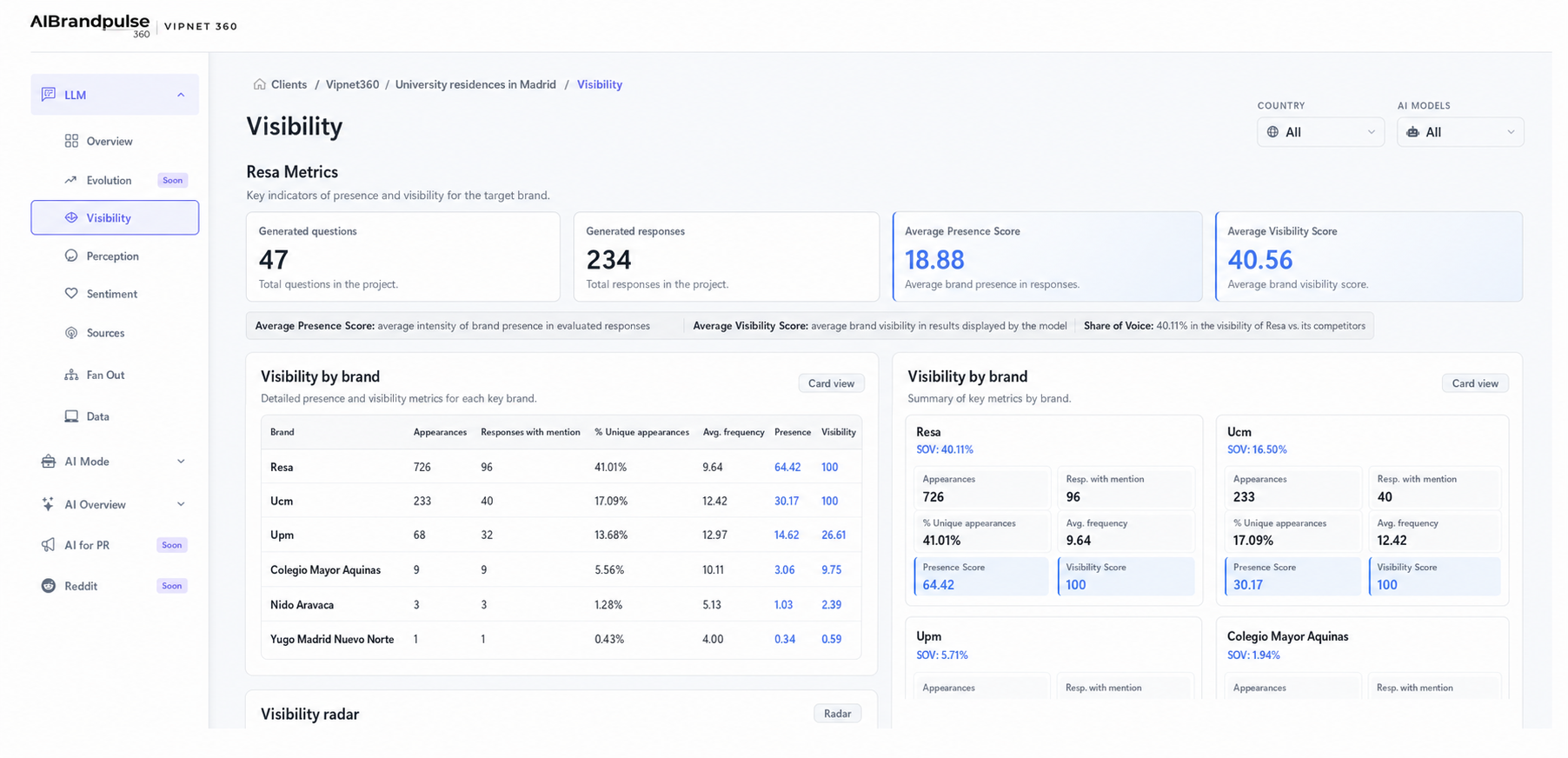
It is not limited to checking whether the brand is mentioned once. Its value lies in analyzing patterns:
- Does the brand appear when the user asks for recommendations?
- Is it mentioned alongside its main competitors?
- Does ChatGPT present it as a leading option or as a secondary alternative?
- Which attributes does AI associate with the brand?
- Does the response convey trust, neutrality or uncertainty?
- Which sources seem to influence that representation?
This analysis is part of AI visibility: a brand’s ability to be mentioned, recommended and contextualized within responses generated by artificial intelligence models.
The difference from traditional SEO is significant. On Google, a brand competes to appear on a results page. In ChatGPT, it competes to be part of an answer.
Why Your Brand Needs to Measure Its Visibility in ChatGPT
ChatGPT is no longer just a tool for generating text or answering general questions. OpenAI introduced ChatGPT Search to provide up-to-date answers with links to web sources, combining a conversational interface with information from the internet. OpenAI explains this development in its ChatGPT Search announcement.
There is also a technical layer that directly affects brands. OpenAI documents different crawlers and agents, such as OAI-SearchBot, GPTBot y ChatGPT-User, which perform different functions related to search, training or user-initiated actions. OpenAI’s official documentation on crawlers confirms that website owners can manage how their content interacts with these systems.
This means that a brand’s public content, presence in external sources, media mentions, comparisons and digital authority can influence how AI understands and presents that brand.
The change does not affect ChatGPT alone. Google has also published specific recommendations for optimizing websites for generative features in Search, such as AI Overviews and AI Mode. In its official guide, Google explains that generative experiences are changing how people discover information and that SEO best practices remain necessary, but must be understood within this new context. Google Search Central covers this in its guide to optimization for generative AI.
The implication is clear: if a brand does not measure how it appears in ChatGPT and other models, it may be losing visibility at a critical stage of the decision-making process.
What a ChatGPT Visibility Tracker Measures
Un ChatGPT visibility tracker must go far beyond counting mentions. For the analysis to be useful, it must turn AI-generated responses into actionable information for marketing, SEO, communications, reputation and brand strategy.
1. Brand Presence
The first question is simple: does your brand appear or not?
For example, a company could analyze prompts such as:
“Best tools for measuring AI visibility”
“Which platform can analyze brands in ChatGPT?”
“Solutions for monitoring brand mentions in artificial intelligence”
“Which companies help improve presence in generative responses?”
If the brand does not appear in these types of queries, the problem is not just positioning. It is consideration. AI is not including the brand among the options it presents to the user.
2. Frequency of Appearance
A single mention does not demonstrate strong visibility. What matters is whether the brand appears repeatedly across different questions, intents and phrasings.
A good tracker analyzes frequency of appearance by prompt category, market, product, competitor and funnel stage.
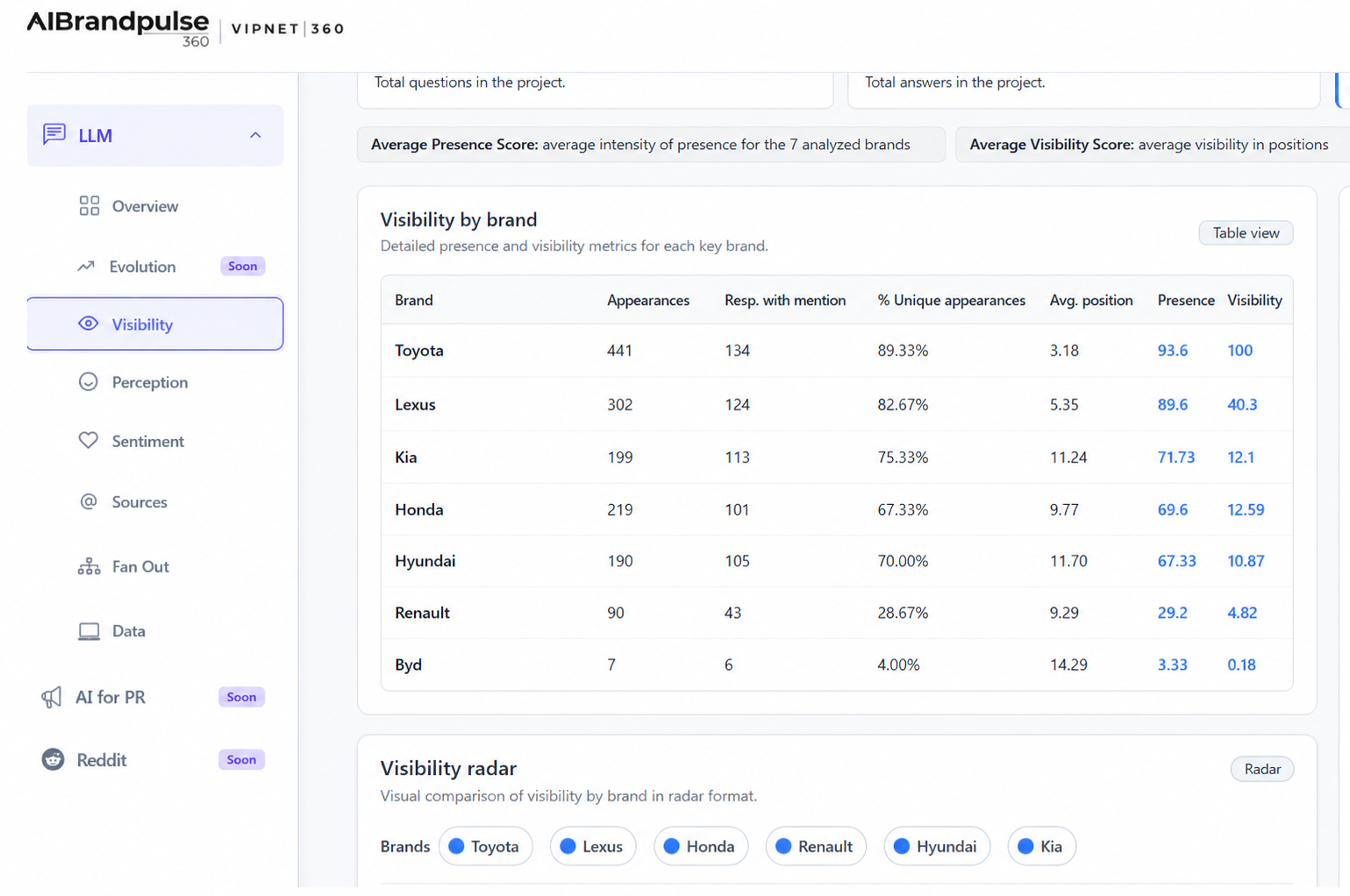
Appearing only when a user asks directly about the brand is not the same as appearing when they ask about generic category solutions. The latter indicates a much higher level of recognition by the model.
3. Position Within the Response
In ChatGPT, appearing does not always mean standing out.
A brand may appear first, halfway down a list, as a secondary mention or in a closing sentence with little relevance. Each case has a different value.
That is why the tracker should measure the brand’s relative position within the response. If ChatGPT recommends a competitor first and only mentions your brand at the end, the diagnosis cannot be the same as when your brand leads the response.
4. Share of Voice in AI
El Share of Voice in ChatGPT helps determine what percentage of presence a brand has compared with its competitors within AI-generated responses.
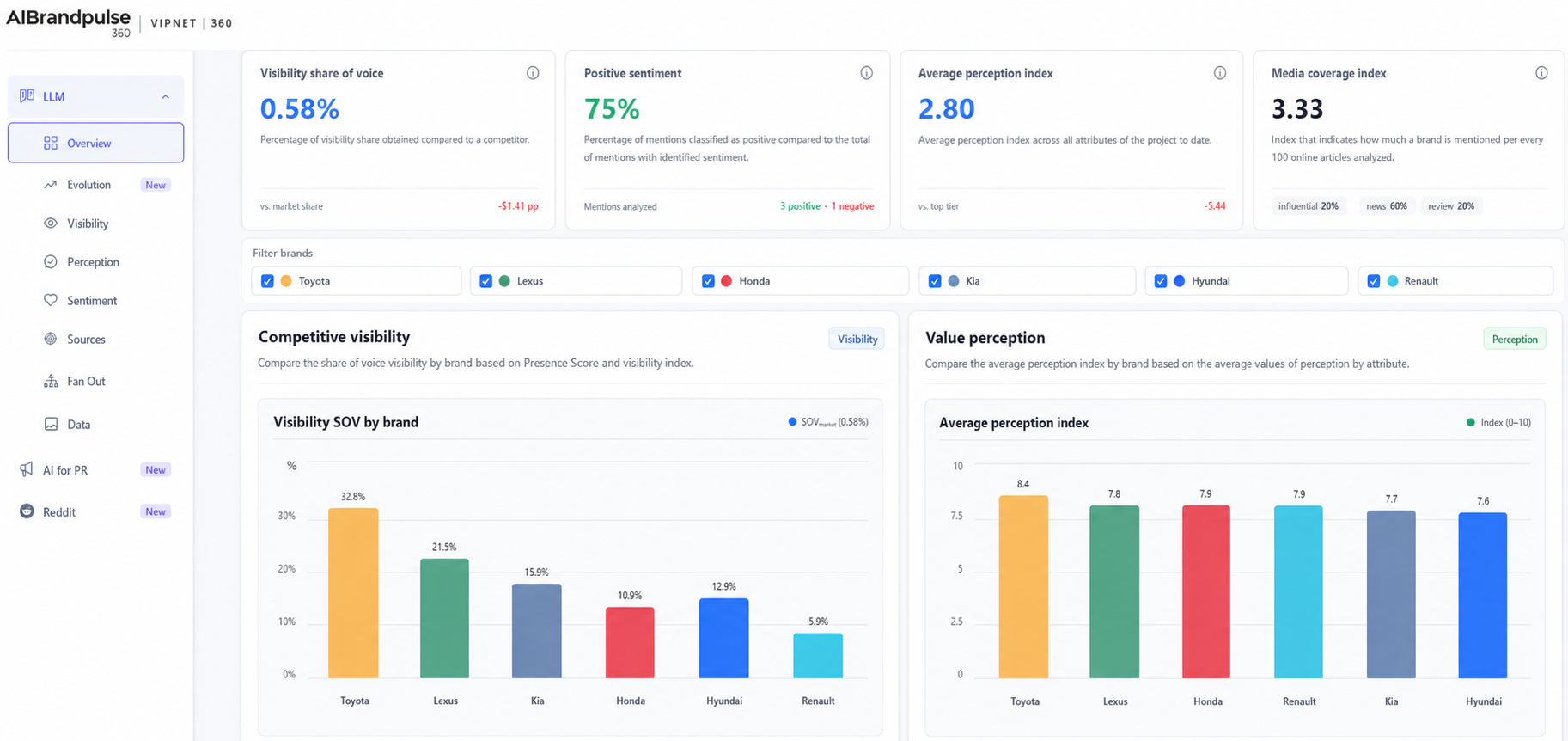
This metric is especially useful when users ask about “best tools”, “leading companies”, “alternatives to…” or “brand comparisons”.
In these cases, the goal is not simply to appear. It is to understand how much space your brand occupies compared with the rest of the market. This logic is directly connected to AI visibility KPIs, where measuring presence, position and relevance becomes a foundation for decision-making.
5. Response Sentiment
A brand may appear frequently and still be represented weakly.
That is why sentiment is a key metric. The tracker should identify whether ChatGPT discusses the brand in a positive, neutral, negative or ambiguous way.
It should also detect nuances. A response may not be openly negative, but may still present the brand as less specialized, less well known, more expensive, less innovative or less suitable for certain use cases.
6. Attributes Associated With the Brand
Visibility does not depend only on appearing. It depends on how the brand appears.
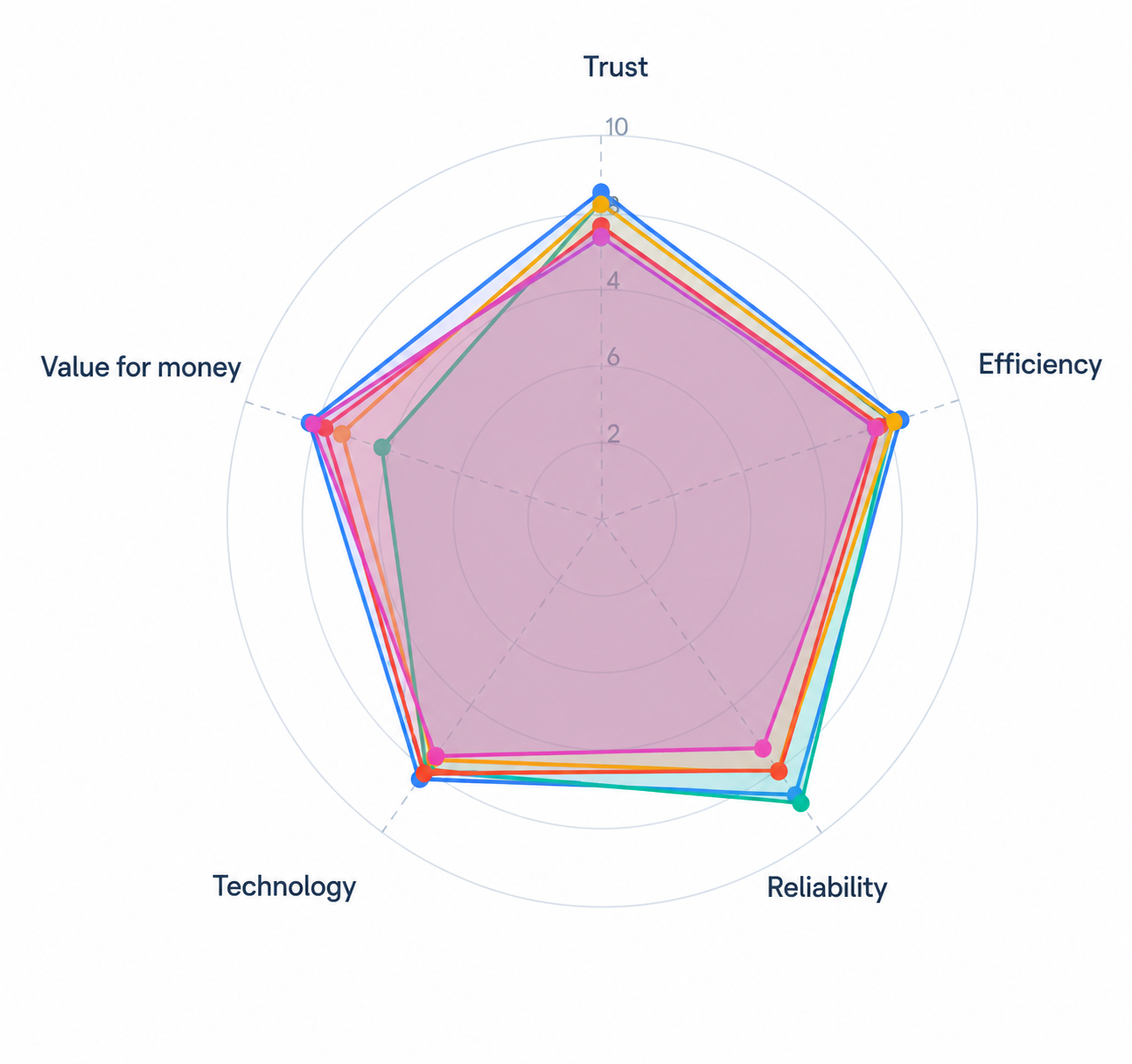
ChatGPT may associate a company with concepts such as innovation, price, experience, ease of use, leadership, support, trust, specialization or reputation.
These attributes matter because they influence user perception.
If a brand wants to position itself as a premium leader but AI describes it as a basic alternative, there is a disconnect between the desired positioning and the generated perception.
7. Competitors Appearing Alongside the Brand
Visibility in ChatGPT should always be analyzed in a competitive context.
A tracker should answer questions such as:
- Which competitors appear more often than your brand.
- Which brands lead the recommendations.
- Which arguments ChatGPT uses to justify those mentions.
- In which prompts your brand disappears while competitors appear.
- Which competitors occupy semantic territories your brand wants to lead.
This analysis makes it possible to identify positioning gaps. The brand may have strong content on its website, but its competitors may have greater presence in media outlets, comparisons, directories, reviews or sources that AI considers relevant.
8. Sources That Influence the Response
One of the most strategic parts of a ChatGPT visibility tracker is source analysis.
OpenAI states that ChatGPT Search can provide answers with links to relevant web sources, and its Help Center explains that search can be activated from ChatGPT to obtain up-to-date information. OpenAI’s official help article on ChatGPT Search explains how this search layer works.
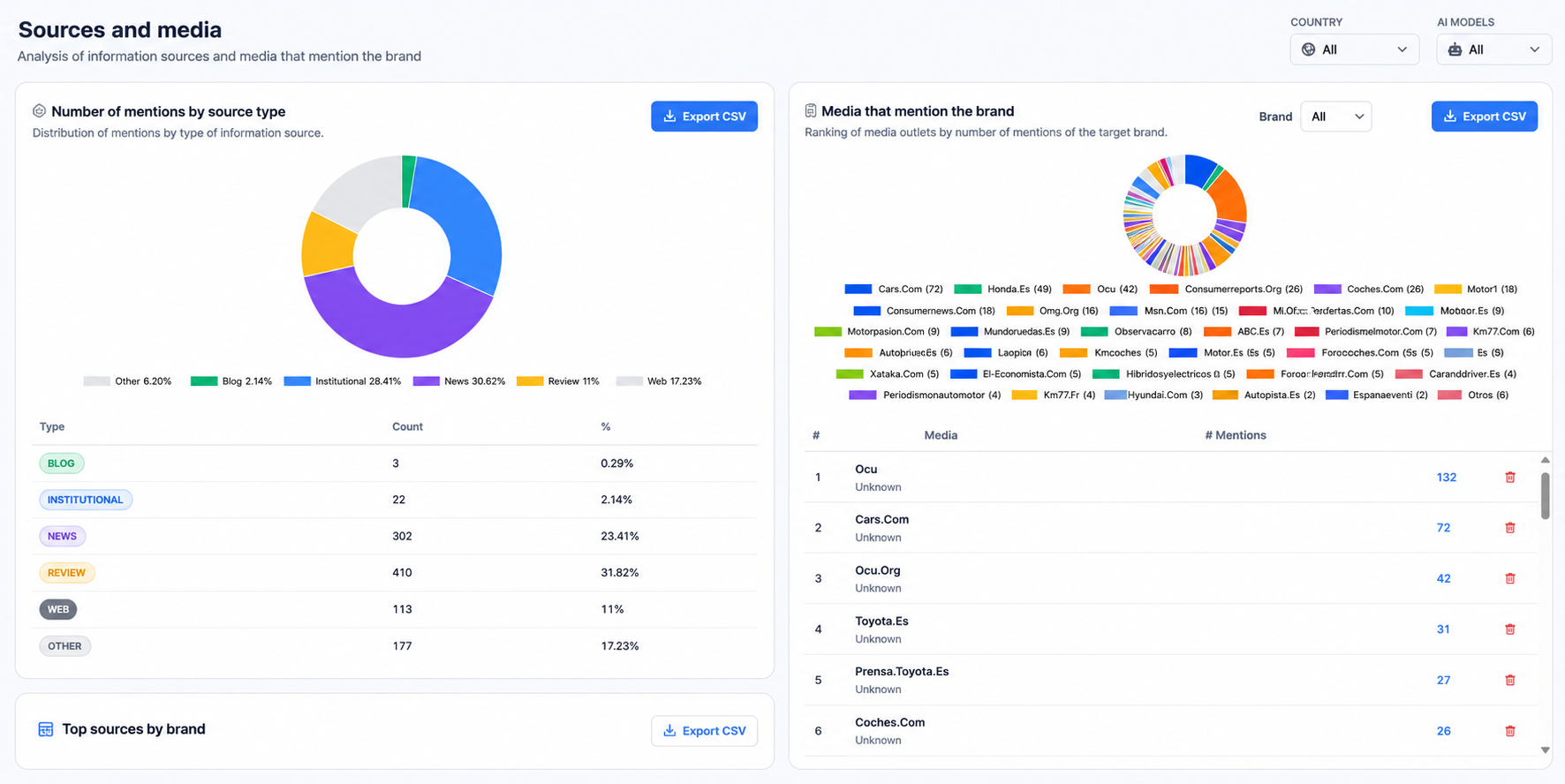
This requires brands to ask which sources are influencing their representation. These may include owned pages, third-party articles, comparison pages, specialized media, corporate profiles, reviews, marketplaces, documentation, directories or partner pages.
The AI brand monitoring should include this layer because the problem does not always lie with the brand itself, but with the information ecosystem AI uses to interpret it.
AIBrandpulse360 como ChatGPT visibility tracker
AIBrandpulse360 makes it possible to measure and analyze how a brand appears in ChatGPT and other artificial intelligence environments. However, it should not be understood solely as a tool. It is a methodology supported by its own proprietary tool for evaluating a brand’s presence, perception and competitiveness within AI-generated responses.
Its approach covers several layers of analysis:
Visibility
It detects whether the brand appears in AI-generated responses and how frequently it appears for relevant prompts.
Competition
It compares the brand’s presence with direct and indirect competitors, identifying who occupies more space within the responses.
Perception
It analyzes how AI describes the brand, which attributes it assigns to it and the tone it uses when mentioning it.
Sentiment
It evaluates whether responses present the brand in a positive, neutral, negative or ambiguous way.
Sources
It helps identify which sources may be influencing the brand’s representation within the models.
Action Plan
It turns the diagnosis into recommendations for improving the brand’s presence in ChatGPT, Gemini, Claude, Perplexity and other AI systems.
That is why AIBrandpulse360 is particularly useful for marketing, SEO, communications, reputation, market intelligence and brand management teams that need to move from intuition to measurement.

 Sep 11, 2026


